Molotschna Colony
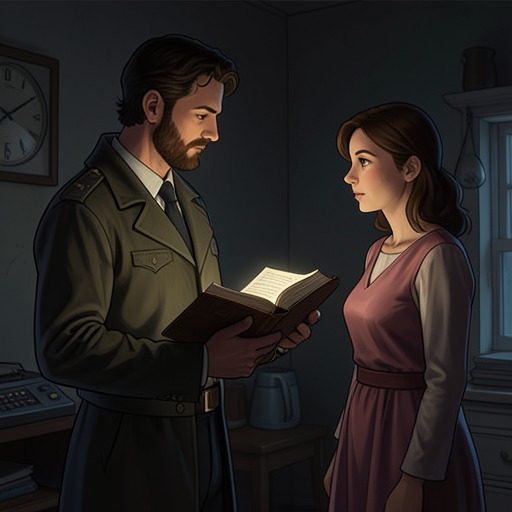
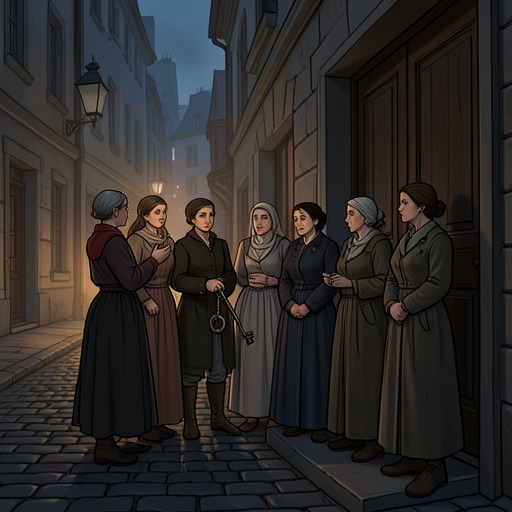
Women TalkingMolotschna Colony is the setting of the book’s central crisis: a community whose daily life is sustained by shared agricultural work, but whose male authorities fail to protect women from years of attacks and then make forgiveness and continued residence conditional on the women’s response. As the women gather to deliberate, the colony’s familiar routines and religious commitments become part of the dispute. Their decision to leave is not simply a departure from a place; it is a challenge to the colony’s control over safety, family, and the meaning of faithful conduct.
Setting and Daily Life
Molotschna is an agricultural settlement organized around farms, animals, and household labor. A path encircles the colony and passes through cornfields and sorghum; the abundance of children is such that August Epp recalls walking that route without having to wait long to see one. The daily work is consequential to the whole community: milking and feeding the animals cannot be left undone even for a day without creating serious disruption. With many of the men away, the burden of these chores falls especially heavily on those who remain.
The women’s meetings take place not around a family kitchen table but in a barn hayloft. Kitchens are crowded with children, and the loft offers the women a place to speak together. Their makeshift meeting room has hay bales supporting a sheet of plywood for a table and milking buckets for chairs. Autje and Neitje sometimes sit on the window ledge or on saddles brought from Earnest Thiessen’s tack room. The space is improvised, yet it enables a different kind of gathering from the household settings in which women’s labor usually takes place.
Molotschna is also self-policed. That arrangement initially leaves Peters and the elders responsible for dealing with the accused men. When violence within the community makes the men’s safety uncertain, the leaders call the police and have them arrested and taken to the city. The shift from local control to outside law enforcement follows not an abstract change in policy but an immediate danger to the prisoners.
The Assaults and the Community’s Response
Beginning in 2005, women and girls in Molotschna were attacked at night after being rendered unconscious with Belladonna Veterinary Spray, an anesthetic used on farm animals. The victims often woke without understanding what had happened. For years, many people in the colony interpreted the attacks as the work of ghosts or Satan and as punishment for sin. The explanation changed when the perpetrators were identified as eight men from Molotschna, many closely related to the women they had attacked.
The scale of the crisis reaches beyond the women who meet in the loft. August calculates that between 2005 and 2009 more than three hundred girls and women were attacked, with an incident occurring on average every three or four days. Leisl Neustadter forced herself to remain awake until she caught Gerhard Schellenberg trying to enter her bedroom with a jug of spray. She and her adult daughter restrained him, and he identified the other seven men. This discovery made the danger legible as a crime committed by men of the colony, rather than an invisible supernatural punishment.
The response also reveals how quickly the crisis can turn into further violence. Salome Friesen attacked one accused man with a scythe, and male relatives of the victims hanged another man, who died after the group passed out nearby. Peters and the elders then arranged for the police to take the accused men to the city. Most of the remaining men traveled there to post bail, hoping the accused could return to Molotschna while awaiting trial. The women were told that, if the men returned, they would have to forgive them to secure their place in heaven; if they refused, they would have to leave for an outside world they knew little about.
The Hayloft Meetings and Their Stakes
Agata Friesen and Greta Loewen hastily organized the meetings in response to the attacks and the deadline imposed by the expected return of the men. The women present from the Friesen and Loewen families represent three generations, and they too have been repeatedly victimized. Their deliberations therefore concern not a distant public issue but the safety and future of their own families. Most women have declined to attend, including those choosing the Do Nothing option; they continue the work of caring for the colony while the meetings proceed. Autje and Neitje agree to pass oral reports to women at home, carrying the deliberation beyond the loft without relying on written communication.
The choices under discussion are shaped by religious belief and by unequal access to authority. Salome questions why women should submit to husbands on the basis of biblical rules they cannot read for themselves, when the rules have been conveyed through men. Agata argues that remaining in Molotschna risks bringing the women into a direct conflict with violence, contrary to Mennonite pacifism. She presents leaving as a way to protect the women and children, bear witness to their faith, and avoid offering forgiveness under coercion. In this argument, departure becomes an attempt to uphold the faith’s ethical demands rather than a rejection of faith.
The colony’s age boundaries also become a practical and moral problem. Fifteen marks baptism and full membership in the church, while boys twelve and under may accompany the women; Salome and Mejal ask why boys aged thirteen and fourteen should be left with the men, particularly if the accused return. August acknowledges that boys of that age can cause harm, but argues that they remain children who can learn through direction, patience, and love. The discussion makes the women’s plan more than a simple division between adult men and women: it asks what forms of care and education might prevent younger boys from inheriting the colony’s patterns of violence.
Departure and the Community Left Behind
As the discussion turns to action, Agata asks whether the women have decided to leave before the men return, rather than stay and fight. Salome gives a blunt additional reason: they would not win. Agata returns the decision to the language of faith, describing their homeland as their religious commitments rather than the settlement itself. The women’s intended departure is thus both a response to immediate danger and an effort to establish a community governed by different principles.
The plan cannot include everyone. When Greta asks whether Cornelius is ready to go, Melvin reports that he will remain because his mother belongs to the Do Nothing group and he has no choice but to stay with her. Cornelius uses a wheelchair and is well liked by the young people, who value his jokes, comedy, and creativity. Agata suggests that he and his mother may yet change their minds, but Mariche counters that the men’s return will mean no women are allowed to leave. The contrast makes the choice costly: the women are preparing to protect children and themselves, while also confronting the possibility of separation from those who stay.
Molotschna remains the point of origin for what the women hope to build elsewhere, not a place the narrative declares transformed or abandoned by everyone. At the close of August’s reflection, he imagines teaching boys about Ona in schoolhouses across Mennonite colonies, and names Ona as the soul of Molotschna. The imagined future carries the colony’s memory outward while changing what that memory can mean. Its familiar structures—work, family, faith, and communal life—are not discarded wholesale; the women’s decision exposes the violence hidden within them and insists that their values must be judged by whether they protect the people who live there.